This Valentine’s day, spread a little love over to radio klassik Stephansdom. This Thursday, February 13, the Vienna-based classical music station will be conducting their first formal fundraiser of 2025, and it’s a worthwhile donation.
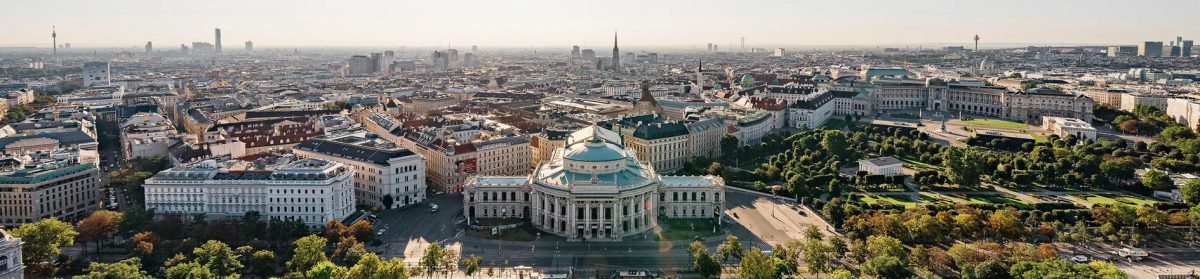
I’ve been meaning for some time to write a little about the Stephansdom itself and its curious appeal to me. As the photograph above indicates, it’s impossible to see the entire cathedral from a single perspective; asymmetrical and a hodgepodge of architectural styles from paganism to the Romanesque, Baroque, and Gothic, it is still not complete and probably never will be; its history stretches from the legendary marriage of Kriemhild and Etzel in the early 13th century Nibelungenlied to its bombing by allied forces in 1945. The curiosa of the cathedral — the phallus and vulva atop columns on either side of the Giant’s Door; the soaring South Tower and its dwarf North Tower; the stone pulpit, with a stone self-portrait of the sculptor at its base; the extraordinary chapels; the tomb of Emperor Frederick III — testify to its long history, a history spiced with tragedy and wit. But what all of this represents to me is extraordinary sacredness, a sacredness of the spirit and the human body itself. Though originally located just outside of the city’s walls, it has come to represent at least the symbolic center of Vienna, a city that for quite some time was at the eastern edge of Christendom itself. In my many visits there I’ve found it inexhaustible as both history and inspiration; it makes one want to turn Catholic, almost. One day I hope my German will be good enough to enjoy Reinhard Gruber’s new book about the cathedral, which looks like just the thing for a rainy afternoon.
Herr Christoph Wellner and the rest of the fine staff over at radio klassik Stephansdom would appreciate your support — and, for Valentine’s Day, a little financial love. The station plans a full day of on-air festivities this Thursday, February 13, so make a donation, sit back, and enjoy the best of the Austrian capital. Below a few notes on radio klassik Stephansdom, which I posted here in late 2023.
Many years ago, when my father was in his 50s and 60s and I was in my teens and 20s, we used to sit together in the evenings and listen to WFLN, Philadelphia’s classical music radio station. For 24 hours a day, mellifluous, plummy-voiced disc jockeys (an unfortunate coinage, that) introduced the masterpieces and less-than-masterpieces of classical music, occasionally interrupted with a commercial break. Founded in 1949, for the first four decades of its existence it barely broke even, but that didn’t much matter; the station’s owners, families by the name of Smith and Green, weren’t particularly interested in turning a profit, only providing music to the city and its environs. In the late 1980s, however, the station’s ownership changed, and in an effort to turn a profit several programming changes were introduced. Instead of playing full symphonies and chamber music works, one got a movement of one, then a movement of another; many of those mellifluous voices were fired; and in 1997 the station finally turned to a pop music format. Announcing the ownership change on the air, Greater Media CEO Tom Milewski rationalized the decision, saying, “Classical music, is, we feel, best presented in a non-commercial context” — a context which wasn’t Greater Media’s, nor was it of many other station owners. So ended WFLN’s nearly half-century run, a run which had provided my father and myself a unique education in classical music.
There is of course still such a thing as classical music radio; here in New York, WQXR offers it, but fragmenting full compositions just as WFLN did in its later years. And streaming music services offer extraordinarily full libraries of classical music recordings and even live events (my preference is for iDagio and Deutsche Grammophon’s Stage+ service), with splendid sound reproduction through their FLAC formats. But I still miss classical music radio itself: knowledgable voices offering not only context but also companionship, the awareness that there’s another person at the other end of the connection, listening to the music at the same time as you were: a musical bond between these listeners, distance obliterated in an aesthetic experience.
Well, not any more. Recently I stumbled upon radio klassik Stephansdom, a radio station that airs in Vienna at 107.3 FM but streams as well, not only through their web site but through several other internet radio services. I’m not sure why I haven’t come across it before — this year the station celebrated its 25th anniversary — but I’m listening to it even now. (An extra appeal is that I get to practice listening to German, too — I’ve taken the language up again.)
The more I learned about it, the more impressed I was. radio klassik Stephansdom was founded in 1998 as the brainchild of Cardinal Christoph Schönborn, who himself flipped the switch in the Archbishop’s Palace in Vienna on September 24 of that year; “Shortly afterwards the Danube Waltz sounded, followed by greetings and blessings from Pope John Paul II,” according to the Google translation of this Archdiocesian web page about the anniversary.
Although rkS is funded and operated by the Archdiocese, in 2025 it looks like the station will be on its own. I must say that I find this a little sad. As might be expected, radio klassik Stephansdom’s music programming runs a little more towards the spiritual than the secular; not a surprise, especially when much great music of the past 500 years, from Machaut to Messiaen (whose 115th birthday was yesterday), was inspired by religious faith. The secular, however, also appears on the station’s playlists; just yesterday, rkS played Bizet’s Carmen with Maria Callas in the title role, a celebration of the 100th anniversary of Callas’s birth.
I will be visiting Vienna little later this month and plan a visit to the Stephansdom with my kids, of course — it’s a site that can’t be missed, especially over the Christmas season. But over the past few days I’ve been imagining and envisioning the Stephansdom as I listen to some of the music that inspired its construction and has resonated in its halls, not to mention the religious, Christian faith that its architecture and that music reflects. Christoph Wellner, the editor-in-chief of rkS, claims as his area of responsibility: “To form a foundation for passing on the Christian message with the most beautiful music — on the radio, on the Internet, in the diocese, in Austria and worldwide.” Herr Wellner can consider it passed on to me.
You can listen to the station from anywhere in the world through their web site here. And below is the full Google translation of this page from the Archdiocese of Vienna, published there in September of this year, filling out the picture a little bit.
25 years ago, on September 24, 1998, “radio klassik Stephansdom” (then still “Radio Stephansdom”) went on air for the first time. At twelve o’clock sharp, Cardinal Christoph Schönborn activated the start control at a ceremony in the Archbishop’s Palace in Vienna, shortly afterwards the Danube Waltz sounded, followed by greetings and blessings from Pope John Paul II.
In its current edition, the Viennese church newspaper “Der Sonntag” recalls its beginnings a good quarter of a century ago. Austria was the last country in Europe to allow private radio, and only after a ruling by the European Court of Human Rights, which found the right to freedom of expression to be incompatible with a broadcasting monopoly. Ten radio licenses were advertised, for which there were 150 interested parties. Originally, church broadcasters were excluded from the private radio law. This had to be changed after a complaint.
The then head of the public relations office of the Archdiocese of Vienna, Wolfgang Bergmann, and his employees saw the opportunity for a private church radio. Cardinal Christoph Schönborn immediately agreed to it, as he knew of private church radios from France.
In June 1997, the application for a license for the Vienna area was submitted. “In the entire free world, churches are not denied the opportunities of radio, I don’t know why it should be any different in Austria,” said Cardinal Schönborn in a broadcast at the time. The plan was a non-commercial special interest radio that would not be profit-oriented, but would cover its costs through income. The license application stated about the content: “The program wants to invite the listener to pause for a moment and recharge their batteries in the hustle and bustle of the day. It should be an oasis for the ears and soul for radio listeners, away from the constant hustle and bustle and without noisy disc jockeys.”
The archdiocese requested the frequency 107.3. In the spring of 1998, work began on converting a former student shared apartment on the top floor of the Teutonic Order House in downtown Vienna into office space. July 1st was the first day of work for the eight program designers at the time, three of whom are still in the team today: program director Christoph Wellner, editor Bernadette Spitzer and technician Martin Macheiner, who was there before everyone else during the renovation and therefore has personnel number 001. The first editor-in-chief and the decisive role in shaping the radio’s fortunes were in the hands of Anton Gatnar until 2014, who also took over management a little later. The current station manager is Roman Gerner.
Radio faces new economic challenges in the future. Since the Archdiocese of Vienna is planning significant savings in its own media sector, from 2025 the station will have to operate entirely on its own without any diocesan subsidy.
The “radio klassik Stephansdom” can now be received throughout Austria via DAB+. The station can be received terrestrially in Vienna on 107.3 and in Graz on 94.2. The number of listeners is around 200,000.