When the Bayreuth Festival opens tomorrow for its 150th season, it will open with a work never presented there before: Richard Wagner’s Rienzi, his third opera, which premiered in Dresden in 1842 and was for many years his most popular opera in Europe (to his considerable chagrin later in life; indeed, he himself barred any production of it at the Festival during his lifetime). Its plot, per Wikipedia:
The opera is set in Rome and is based on the life of Cola di Rienzo (1313–1354), a late medieval Italian populist figure who succeeds in outwitting and then defeating the nobles and their followers and in raising the power of the people. Magnanimous at first, he is forced by events to crush the nobles’ rebellion against the people’s power, but popular opinion changes and even the Church, which had urged him to assert himself, turns against him. In the end the populace burns the Capitol, in which Rienzi and a few adherents have made a last stand.
Rarely performed, the curtain rises in Bayreuth tomorrow, July 26, at 4:00 pm local time. Wagnerians of the United States, however, can turn to Deutsche Grammophone’s Stage+ service to watch it live tomorrow at 10:00 am Eastern time, with repeats at 6:00 pm tomorrow night and 5:00 am on Monday morning. (A Vienna friend offers a few more options.) The production is directed by Alexandra Szemerédy and Magdolna Parditka, while Nathalie Stutzmann takes the podium.
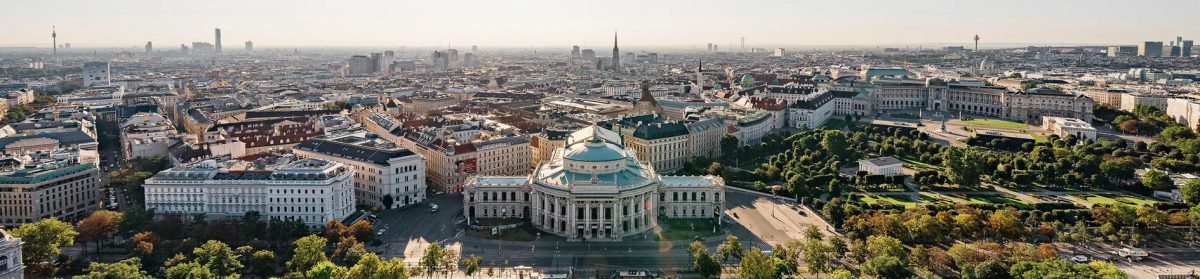
One of the most moving moments of my last trip to Vienna was my attendance at Mass at the Wiener Hofmusikkapelle on my birthday, where Caldara’s Missa Dolorosa was on the program. So I’m delighted to report that radio klassik Stephansdom‘s music director Ursula Magnes, with whom I had the delight of exchanging a few pleasantries about Heinrich Schütz last year, has been named the new director of the Hofmusikkapelle, beginning on September 1. This is the first time a woman has been named director to the post. Rector Peter Schipka said, “As rector of the Hofburgkapelle and thus as the ecclesiastical responsible for the services in this place, I congratulate Mrs. Ursula Magnes very warmly on her appointment as director of the Hofmusikkapelle, as the first woman in this function. I am delighted by her appointment and look forward to working with her.” I congratulate her too, for what it’s worth; the Hofmusikkapelle is in good hands.
My move to Philadelphia is now complete, and I’ve even had the opportunity to attend services at Christ Church — something I’ve always wanted to do and a meaningful visit to be sure; on July 5 the Morning Prayer included a reading of the Declaration of Independence. Otherwise I’ve been spending some time reacquainting myself with the spirit of the city and find it more delightful every day. It is home.
A minor curb on my enthusiasm has been Brett H. Mandel’s 2023 book Philadelphia, Corrupt and Consenting: A City’s Struggle Against an Epithet, a history and study of political corruption in Philadelphia, its title inspired by Lincoln Steffens‘ conclusion that Philadelphia is “corrupt and contented.” It is, actually, a fine book and a worthy companion to A Prayer for the City, Buzz Bissinger’s rather more optimistic 1997 portrait of Philadelphia under the Ed Rendell administration — a witty, informed, and informative read. Before diving into the swamp of Philly corruption, though, Mandel in his introduction describes his affection for the city, and it’s a good description of how I and many other native Philadelphians feel about the city as well:
I want to make it clear that I love the City of Philadelphia despite all its flaws. I love the physical city: the buildings, the parks, and the strollable neighborhoods. I love the metaphysical city: the palpable history, the ideals of William Penn’s Holy Experiment, and the poignancy of more than three centuries of struggle to make a city where all can thrive. Most of all, I love Philadelphians’ collective lack of self-importance and the sense that we are all in this together. … I love the fact that Philadelphians know all too well what is wrong with our city, but the same enumeration of complaints from an outsider becomes fighting words. … I love that Philadelphians cheer for our teams as if our enthusiasm alone could make up for their dearth of talent, and I love that Philadelphians boo our teams when they don’t care as much about winning as we do. … Most of all, in spite of so much evidence telling us that the forces of the world are aligned against us, I love the fact that Philadelphians never give up. Philadelphia is a dirty city that still shines and a poor city that still has hope — a city of endless potential, no matter how many times we have failed to realize it.
My birth certificate tells me that I was born at Pennsylvania Hospital at 8th and Spruce Streets in Philadelphia, but my earliest childhood memory of Philadelphia remains that of John Wanamaker’s department store during a Christmas season of the 1960s. My mother, my brother, and I rode a Reading Railroad commuter train from our suburban home in Feasterville to the Reading Terminal on Market Street one gray December morning, our destination being the Christmas Village, the seasonal holiday display at Wanamaker’s. At that time, I am given to understand, the store was in an economic decline, but Wanamaker’s — along with Lit Brothers, Gimbel’s, and other Philadelphia department stores — still attracted hordes of Christmas shoppers. The Wanamaker store, though, was unique: the toy department featured a train, the Rocket Express Monorail, that chugged uneasily around its ceiling; on the main floor, also known as the Grand Court, a brightly-colored Christmas tree presided over one end of the cavernous building and, at the other, the Wanamaker Organ merrily tooted out holiday standards. Near the center of the Grand Court itself stood the Wanamaker Eagle, a huge bronze sculpture reportedly cribbed along with the Organ from the St. Louis World’s Fair at some point, which became a meeting place for shoppers and, I assume, many lost children and their parents. “Meet me at the Eagle,” the saying went. It must have made an impression, obviously, for I still remember it well.
I look warily upon Wikipedia, but it tells me that the organ “is the largest fully operational pipe organ in the world, with some 28,750 pipes.” I doubt that somehow, having seen and heard a lot of pipe organs in my time; like many things that have been called “large organs,” the size was probably exaggerated. I saw it most recently when I visited the building last month to sign papers for our purchase of a new home in Philadelphia. After years of ownership changes and slow decay, the store itself closed in 2025, and now the building is home to an array of offices and apartments, among them one of those WeWork-style shared office businesses, which is where we closed on the house. On my way up to the office, though, I had a chance to see the Grand Court, cleared now of display cases and shoppers. But the Eagle and the Organ were still there, and I understand that organ concerts take place occasionally through the year. On that afternoon, though, nobody else was to be seen.
Architect’s rendering of the Grand Court at the John Wanamaker department store in Philadelphia, present day; organ and rear of the Eagle prominent. Reality itself revealed that the restaurant — and the people — have not yet materialized.
Another Philadelphia institution I’ve been revisiting lately is Philadelphia magazine, which I originally read in the late 1970s and early 1980s, when the publication was under the editorship of Maury Z. Levy. Like those of other magazines of the time, the editorial vision there leaned toward snark, but Philadelphia did its share of investigative reporting too and over the years it’s won several National Magazine Awards. Originally owned by the Lipson family and Metrocorp, it was purchased recently by the Citizen Media Group, and just this month the magazine launched its new redesign under CEO/Chairman Larry Platt and editor Christine Speer Lejeune. “We are a love letter to Philadelphia,” runs an “About Us” column on the masthead page, and Lejeune goes further in her opening editorial about this “love”:
It’s love when we’re talking to chefs about what they’re serving up; love when we’re profiling Philly characters. It’s love when we’re holding power to account and when we’re celebrating Best of Philly (rest assured, that’s not going anywhere). It’s love when we shoot a portrait or snag an exclusive; it’s even love when we land the occasional jab. (Philly can take it.) …
Only in Philly. Nothing but love.
Emphasis in the original.
Philadelphia magazine remains extraordinarily well-written, as I mentioned in 2024, and I read each issue cover to cover. Tom McGrath’s long-form essay about Philadelphia in the June issue is the best thing I’ve read about the city in years. (I wish Lejeune had taken more of a red pen to Platt’s 5,000-word deification of former Sixers owner Pat Croce.) But there’s something … well, un-Philadelphian about this emphasis on love, “City of Brotherly Love” beside the point. This kind of 21st-century Babbitry skids hard against Philadelphians’ natural tendency to deadpan skepticism, even cynicism, as much a part of a native Philadelphian’s genetic makeup as the accent. One of the differences between the city and New York is Philadelphia’s rejection of any expression of boasting and self-importance, a rejection once reflected in that “Best of Philly” feature that Lejeune promises she’ll keep. Under Levy, the feature was known as the “Best and Worst of Philly,” providing not only an opportunity for the magazine’s writers to flex their snark muscles but also an admission that you have to take the bad along with the good, that some seemingly popular people and things deserve not only jabs but comic eviscerations. If Philadelphians love their city, it’s a form of tough, not unconditional, love. It’s W.C. Fields, not Rebecca of Sunnybrook Farm.
Maudlin nostalgia notwithstanding, you can go home again, but you can’t expect it to be the same as you left it. Lit Brothers and Gimbel’s, too, closed years ago, to be replaced by a succession of chain-store-ridden shopping malls of various kinds which seem to be ekeing out a precarious existence along the Market Street mercantile corridor. Of course I am different as well, having left Philadelphia for New York more than thirty years ago; I’m also somewhat the worse for wear. Which raises the question: What remains of Philadelphia and the genius loci that led to documents like the Declaration of Independence and buildings like the French Second Empire style City Hall as well as the rest of its extraordinary architecture? And what remains of a repatriated Philadelphian?
Time will tell, of course. But on several visits back to the city over the past few years, I have sensed some Philadelphian characteristics that make for a vivid contrast to New York. Along with that lack of self-importance, there is a self-conscious spirit of “We’re all in this together” in Philadelphia that eases the anxiety of a multicultural community, a sense that we’re all somewhat better off if we make room for each other on good and bad days. In a short essay in the Encyclopedia of Greater Philadelphia, Richardson Dilworth, a professor at Drexel University and the grandson of the Philadelphia mayor of the same name, put his finger on the unique features of Philadelphia’s sense of tolerance and, if not respect, then indifference; in that essay he was discussing the “Place that Loves You Back” city slogan that Philadelphia offered as a riposte to New York’s “I Love New York” in 1997:
Since the city’s antisocial reputation also defined some of the city’s perceived virtues of tolerance and acceptance, it seems worth asking what shared sense of community we gave up in selling ourselves more successfully to tourists. “The Place that Loves You Back” suggests that we offered to welcome tourists into a warm and intimate community. We want you to have fun; in fact, we’re going to insist that you have fun, because we love you and we care. But in making this new offer, have we forsaken the mixed history of tolerance and indifference that allowed anyone to come here and do what he or she wanted while the rest of us didn’t care?
As Dilworth suggests, that admixture of tolerance and indifference gives rise to a kind of personal freedom that for me is the essence of Philadelphia. (Forgiveness is a virtue, too, even if it’s increasingly rare in our selfish age.) A recent history of the city notes that, for all the efforts the city government and its boosters undertake to assign specific civic functions to public spaces, Philadelphians will generally do with those spaces what they want, as they will do with their lives.
On my way to Philly’s new bus terminal earlier this week for my return trip to New York, I stopped for lunch at Pearl’s in the Reading Terminal Market to enjoy a fried shrimp basket — just downstairs from the train shed where my train from Feasterville arrived sixty years ago. With a few minutes to spare, I wandered through the busy lunch-time market, marvelling at the wildly mixed ethnicities of both the food on offer along with local stalwarts like Tommy DiNic’s and the Termini Brothers and the people who were enjoying it, who like me tolerated the crowd and overlooked the occasional bumps and rudeness that such a large crowd engenders. Some things don’t change. The food was terrific, as good as I remembered it. So was the vibe.
I loved it, sure. Did it love me back? That I don’t know, but it made room for me, which makes all the difference.
radio klassik Stephansdom broadcasts four complete operas every week — a unique quality in itself — and this summer the station will be devoted to the operas of two great German composers in recognition of a few anniversaries.
Carl Maria von Weber died on 5 June 1826, two hundred years ago, at the age of 39. Despite that relative youth, by the time of his death Weber had become perhaps the most accomplished composer of German romantic opera, producing several operas, some of which remain in the repertory today. radio klassik Stephansdom will broadcast seven Weber operas in their entirety in June, including his most famous opera Der Freischütz and two complete recordings of his one-act comedy Abu Hassan. More information about this mini-Weber-festival can be found here.
Weber was a profound influence on Richard Wagner, a man not fond of acknowledging influences outside of himself. The 150th anniversary of the opening of Bayreuth takes place this August, and during that month and the month of July radio klassik Stephansdom devotes the larger segment of its programming to Wagner, and specifically his Ring cycle. Both the Solti and von Karajan Ring cycles will be broadcast in their entirety through those two months, along with special programming from Stefan Mickisch that examines over 200 motifs in the Ring and a six-part special series by Markus Vorzellner on the origin story of the tetralogy. (Wagner’s Die Meistersinger von Nürnberg will also be broadcast on 23 June; one can also expect broadcasts of Beethoven’s Ninth Symphony [which opened the Bayreuth Festival on 13 August 1876] and selections from Tristan ünd Isolde, perhaps my favorite Wagner opera, if not my favorite opera of them all.) More specific information here.
I can now see how I’ll be spending the summer — along with dedicating myself more diligently to improving my German so that I can enjoy more fully the rest of rkS’s programming. A full June-August schedule of radio klassik Stephansdom’s opera programming can be found here. More on that fine Vienna institution radio klassik Stephansdom here.
I’ve never made a secret of my enthusiasm for the Neue Sachlichkeit/New Objectivity genre of early 20th century art, but until now my exposure has been limited to artists of Germany, such as George Grosz and Christian Schad. On my recent visit to Vienna I came across a few samples of the Austrian branch of this art, but alas, English-language material on these paintings and sculptures has been meagre.
If someone would care to put up the money for another trip to Vienna, I’d thank them for allowing me to visit PREMIERE!: The Oesterreichische Nationalbank Collection, running through October 11 at the Leopold Museum, which features a terrific selection of Austrian Neue Sachlichkeit, early 20th century geometrical and gestural abstraction, and figurative work. Franz Sedlacek’s painting at the head of this post is unsettling in a way that the German New Objectivists only sometimes achieve. According to the Leopold web site,
As a representative of Magical Realism, Sedlacek is often dubbed a “mystic of New Objectivity”. Working as a chemical scientist, the self-taught artist devoted his evenings to experimenting with painting, creating uncanny depictions. The effect of spatial depth, similar to that of a peep box, offers viewers the opportunity to delve into another world and to witness a surreal scene: Coziness gives way to trepidation, the apparently familiar becomes absurd.
As it is, I will have to settle for the digital exhibition of PREMIERE!, which as fine as it is leaves one hungry for more. I hope a few of my new Austrian friends will visit the exhibition and report back. In the meantime, I can dream.