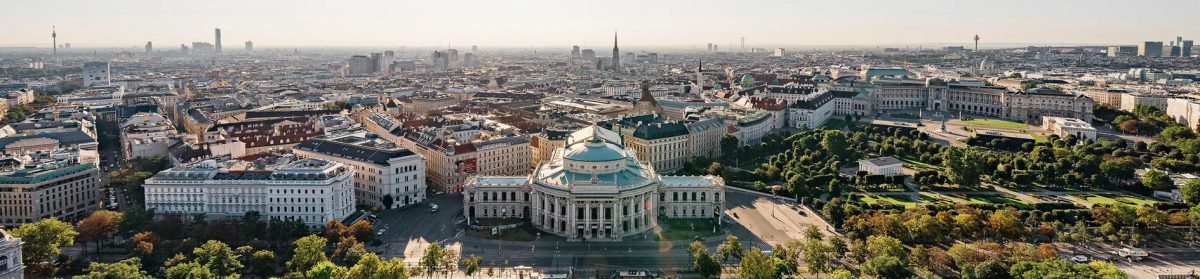
Solitary tourism, in Vienna and elsewhere

From Simon Winder’s delightful 2010 book Germania: In Wayward Pursuit of the Germans and Their History:

Quite possibly the pleasure of this way of life would be much reduced in some other countries, particularly more insistently gregarious places such as Italy. German culture puts a high value on temporary solitude of a stagey kind. Perhaps this is its great gift. In some moods I think there is no need to do anything other than read German writers from the first half of the nineteenth century — a sort of inexhaustible storehouse of attitudes flattering to those who just like sometimes to be left alone. …

The poetry on this subject stretches out to the most hazy, distant horizon and fed a century of German songs, culminating perhaps in the greatest of them all: Mahler’s setting of a Rückert poem, “I have lost track of the world with which I used to waste much time,” a work of such richness that it can only be listened to under highly controlled circumstances. The idea, whether in Goethe, Mörike, Rückert or Heine, is to be alone, in a wood, on a mountain, in some overpoweringly verdant garden, or just inside one’s head, almost always as a moment’s pause before plunging back into a world of love and normal human decisions. This tic is of course a bit unpolitical and some writers have seen it as passive in a way that implies a German malleability and failure to engage with disastrous implications for the future. But equally it is an anti-political, fiercely private stance, with a built-in resistance to fanaticism or mass manipulation. It seems hard on Schubert’s songs for them to be viewed as early danger signs of a failure to stand up to Nazism.

Marjorie Perloff (1931-2024)

Marjorie Perloff. Photo by Alan Thomas (2016).

Marilyn and I will be raising our glasses tonight to the memory of critic, translator, and memoirist Marjorie Perloff, who cast off this mortal coil last Sunday at the age of 92.

Professor Perloff was a staunch champion of the American avant-garde, especially its poets (Frank O’Hara and Charles Bernstein) and its musicians and choreographers (John Cage and Merce Cunningham). But more recently she had turned her attention to the Vienna of her youth; her 2004 memoir The Vienna Paradox is a moving, beautifully written but typically intellectually uncompromising examination of her youth and early career as an emigre from Austria, and I’ve written about her 2016 Edge of Irony: Modernism in the Shadow of the Habsburg Empire — a book that deeply affected me when I read it — here. In 2022 she published a fine translation of Ludwig Wittgenstein’s Private Notebooks: 1914-1916 (noted here), and her introduction graces a new translation of the Tractatus Logico-Philosophicus, published just last month and on my next-to-read list.

Clay Risen wrote the obituary for the New York Times, and an “In memoriam” written by Alan Thomas with the collaboration of Perloff’s family, the poet Charles Bernstein, and the University of Chicago Press appears here.

“The limits of my language means the limits of my world”

Coming across Ludwig Wittgenstein’s assertion above was appropriate, as I am learning German again, even though Wittgenstein wasn’t talking about learning foreign languages specifically — I’m afraid that interpretation is far too facile. Nonetheless it’s an assertion that sticks with you whatever language you speak, and I’m confident of its truth. It’s why I’ve been a bit of a pest with my children, encouraging them to take up a second language in the sense that it will give them a second world, and additional worlds mean additional possibilities. The fewer limits, after all, the broader the world — perhaps a worthwhile corollary to Wittgenstein’s assertion.

I came across it while reading Marjorie Perloff’s recent translation of Wittgenstein’s Private Notebooks: 1914-1916. Read in the context of an exploration of Vienna in the interwar years, it’s an enlightening experience, too. I’m neither an academic nor even a casual student of philosophy, but the notebooks also remind me that I should be picking up Damian Searls’s new translation of the Tractatus Logico-Philosophicus, which also features an introduction by Professor Perloff. The publisher, W.W. Norton, leads me to believe it just may reward attention even from a layperson like myself — “Searls renders Wittgenstein’s philosophy clearer and more accessible than ever before,” Norton says, and that can’t hurt. You can also get a taste of this from Searls’s introduction to the book, a version of which is available here at the online magazine Words Without Borders.